
Decoding the Differences Separating Bottega Desires and Bottega Veneta
Consumers looking around for street-style pieces with an Italian-luxury flavor keep coming across two names that sound nearly the same: Bottega Desires and Bottega Veneta. That naming resemblance isn’t accidental, and it’s just why so many shoppers end up on comparison searches trying to figure out what is Bottega Desires before they place an order. This piece dissects what each brand truly stands for, how they contrast in product range, pricing logic, and positioning, and what you should know before buying either one in 2026.
As Bottega Desires clothes have gained more exposure on social media and resale marketplaces, mix-ups between the pair has deepened. Founded in 1966, Bottega Veneta is a long-established Italian maison, recognized worldwide for its leatherwork, particularly its intrecciato woven leather technique. Bottega Desires, by contrast, is a separate streetwear-oriented label that leans into casual staples — hoodies, shorts, shirts, and jorts — built around a distinct identity rather than trying to be a direct substitute for the luxury house. Understanding that distinction upfront saves shoppers from misreading either brand’s intentions.
Bottega Desires—What Does It Actually Mean?
Rather than positioning itself as a dressy or leather-focused house, Bottega Desires markets itself as a relaxed, streetwear-leaning label. Everyday pieces dominate its catalog, ranging from logo-adorned shirts, cotton-based shorts, heavyweight fleece hoodies, and loose-fitting, denim-style jorts. Matching affordable price points with a name reminiscent of established Italian fashion cues is what makes the label attractive, and this readily encourages the label being set against Bottega Veneta.
For someone looking through a Bottega Desires review prior to buying, the common theme is that the label bottega desires official positions itself as day-to-day fashion rather than high-end collectible luxury. This implies the purchase decision hinges on a different set of standards than it would for a $3,000 leather bag. Fit, the weight of the fabric, the durability of the print, and shipping reliability matter more here than resale worth or heritage craftsmanship claims. Reviews often point out that Bottega Desires’ hoodie and shirt launches are targeted at a younger, trend-driven audience who wants a distinctive look without committing the kind of budget a luxury house demands.
It’s also worth noting that Bottega Desires operates independently of Bottega Veneta’s corporate structure, design studios, and retail network. There’s no shared ownership, no shared factories, and no shared product development pipeline. The naming overlap is a marketing choice, not a corporate one, and shoppers should treat the two as fully separate entities when evaluating quality claims or warranty expectations.
Bottega Veneta: Where Heritage Sets the Standard
Established in Vicenza, Italy, in 1966, the house built its reputation on intrecciato, a woven leather technique that almost sixty years on remains the house’s most recognizable signature. The label is part of the Kering group, one of the world’s biggest luxury groups, together with houses including Gucci and Saint Laurent. Fashion shows, flagship boutiques in cities like Milan, Paris, and New York, and a degree of quality control built on decades of long-standing leatherworking craftsmanship are all sustained by that corporate backing.
Bottega Veneta’s core categories are leather handbags, footwear, and ready-to-wear, with price points that reflect its luxury-house status — handbags commonly run into the thousands of dollars, and even smaller leather goods rarely dip below a few hundred. The brand does produce casual and streetwear-adjacent pieces each season, but even those sit within a luxury pricing tier, not a budget-friendly one. This is one of the clearest structural differences when people search bottega veneta desires expecting some kind of official collaboration or sub-line — no such formal connection exists between the two brands.
Bottega Desires compared to Bottega Veneta: Head-to-Head Look
The majority of buyers pay attention to certain categories when weighing their options between the two labels, or trying to understand why they keep showing up in the same search results, and the breakdown underneath distills exactly those points. Laying the two brands next to each other makes the practical differences easier to absorb than scrolling through paragraphs of write-up.
| Classification Type | Bottega Desires | Bottega Veneta |
|---|---|---|
| Founding | A casual-focused label that arrived on the scene recently | 1966, hailing from Vicenza, Italy |
| Key Items | A lineup of hoodies, shirts, shorts, jorts, along with laid-back streetwear staples | An assortment of leather handbags, footwear, as well as ready-to-wear |
| Ownership Status | Runs as an independent entity within the streetwear brand | Owned by Kering |
| Price Range | Entry-level-to-midrange street-fashion price points | Sitting in the premium tier, often reaching four to five figures |
| Signature Element | Casual fits combined with striking visuals as well as streetwear branding | The Intrecciato woven leather technique |
| Sales Channels | Distributed chiefly via direct online storefronts, bypassing traditional retail | Sold through flagship stores, along with approved luxury resellers |
| Target Shopper | Streetwear along with casual fashion shoppers | Buyers of luxury goods, as well as collectors |
What the table reveals is plain: each brand speaks to a separate kind of wardrobe and a separate kind of spending power. Someone in search of a off-duty weekend hoodie is not usually comparing the same trade-offs as someone eyeing a investment-grade leather bag, even if a search engine happens to show both names on the same results page.
Line Range: The Shirts Roundup
Bottega Desires apparel gravitate strongly toward pieces that work for daily rotation rather than one-off events. Made to handle chillier climates and stacking with other pieces, Bottega Desires’ hoodie range commonly relies on thicker cotton-blend fleece fabric, featuring graphic or embroidered branding as a main visual feature. Buyers seeking something less heavy often lean toward the Bottega Desires’ shirt selection, which tend to lean toward loose-fitting silhouettes and bold print work over closely fitted cuts.
Turning to the bottoms category, these two Bottega Desires bottoms styles meet a pair of distinct casual purposes. On the other hand, the jorts embraces a denim-inspired aesthetic that’s become widely favored across streetwear generally, not just this particular brand, whereas the shorts mostly fulfill warm-weather or athleisure purposes. Each category is priced with multi-piece purchases in mind rather than a single big-ticket buy, which suits the brand’s general approach to casual dressing.
Bottega Veneta’s overall catalogue, by comparison, hardly ever includes jorts or graphic hoodies as central seasonal pieces. On the occasions the high-end house drops casualwear, it’s usually minimal in visible labeling, constructed from high-end materials, and marked up well past streetwear norms. This divergence in creative approach — bold graphics and accessible pricing versus subtle refinement rooted in premium craftsmanship — essentially forms the core of the bottega desires vs bottega veneta conversation.
Pricing Logic Explained, and What It Means for Customers
Browsing an actual item page, you’ll find that price is often the most immediate distinguishing signal between the two labels. Bottega Desires pieces are priced for easy, everyday buying — a buying pattern where a customer might easily pick up a hoodie, a pair of shorts, and a shirt all at once without a second thought about budget. Bottega Veneta exists within an entirely separate pricing category, where one product often costs more than a full seasonal collection of clothing from a streetwear label.
This gap matters because it influences shopper anticipation. A Bottega Desires review that fixates on stitching density or leather grain quality is misapplying its questions to a streetwear brand — the more relevant metrics are fabric weight, print longevity after washing, and true-to-size fit. Meanwhile, those shopping Bottega Veneta are usually weighing leather sourcing, hardware finish, and long-term resale value — considerations that simply don’t translate to a cotton hoodie or jort.
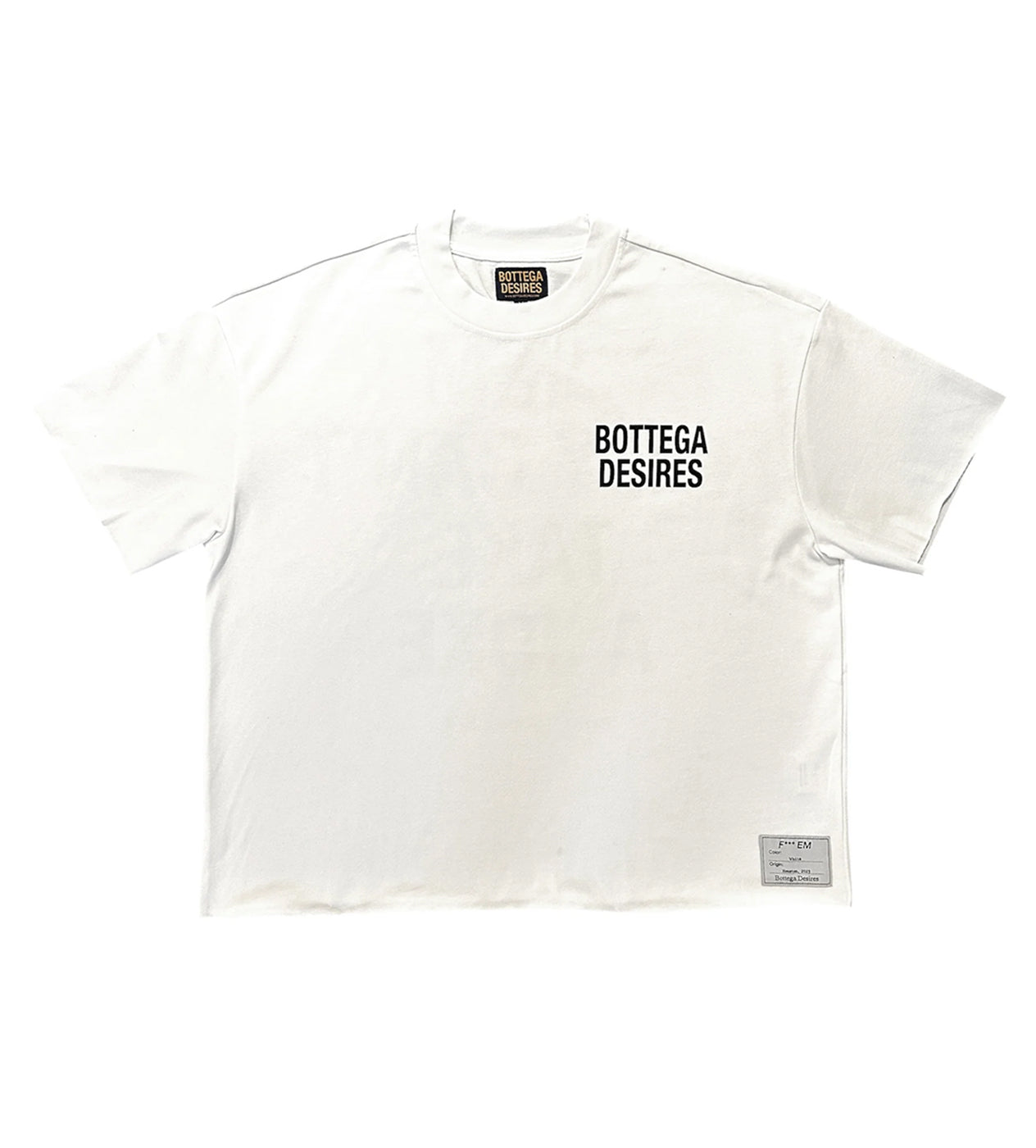
Dispatch schedules, refund/return terms, and sizing references also tend to differ significantly between a direct-to-consumer streetwear operation and an international luxury house with flagship boutiques. Customers are advised to always confirm the brand’s own dedicated sizing information and shipping policy before completing purchase rather than taking for granted that either brand uses conventional size standards, given that fit tends to change substantially between laid-back streetwear shapes and finely tailored luxury ready-to-wear.
Selecting What’s Right for Your Own Wardrobe
The core question, when deciding between these two, is which void you’re hoping to close in your closet. If you want casual daily pieces — hoodies to layer up, shorts for warm months, graphic shirts, and casual-feeling denim jorts — Bottega Desires pieces are made for that exact use case and priced to match. If instead you want an investment leather bag or a pair of shoes meant to last years and keep their value on resale, Bottega Veneta’s quality-driven, craft-led ethos and premium market stance are the more suitable choice.
Neither label is out to supplant the other, notwithstanding the name similarity that continues to spark comparisons. Bottega Desires fills a streetwear niche with approachable cost points and design that tracks current trends, while Bottega Veneta stays rooted in generations of leather-craft tradition and high-end retail systems. The choice is far less complicated than the search results initially suggest once you know which category you actually need — everyday casual clothing or an investment in lasting luxury.

0 Comments